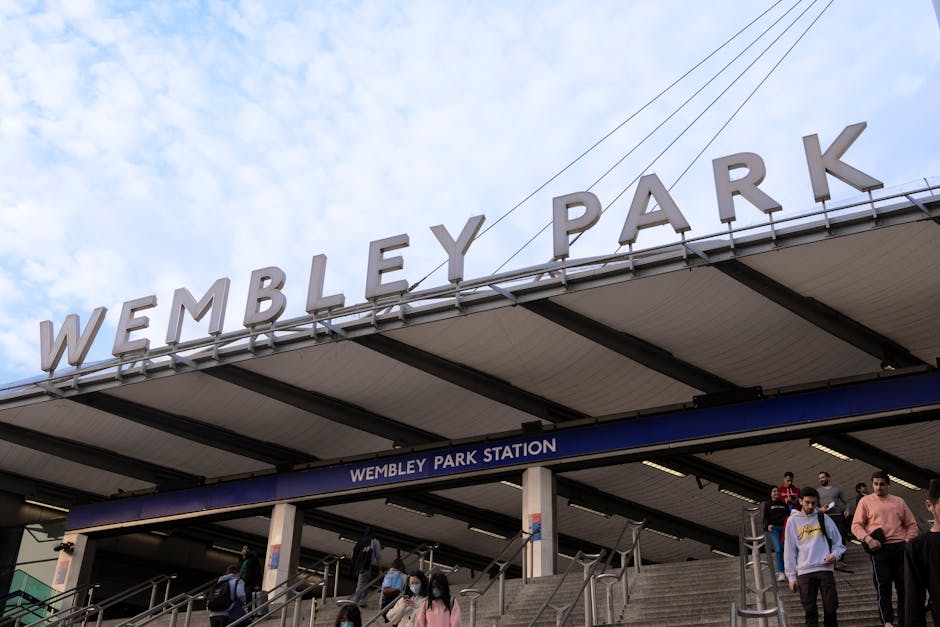
Instant Wembley van quotes: what details to have ready

If you want instant Wembley van quotes, the quickest way to get a useful price is to give the right details up front. That sounds obvious, but in real life people often send a message with only "need a van tomorrow" and then wonder why the quote comes back vague, delayed, or full of follow-up questions. Truth be told, a good quote is only as good as the information behind it.
This guide walks you through exactly what details to have ready, why they matter, and how to avoid the little slip-ups that slow everything down. Whether you are moving a flat, shifting office items, collecting furniture, or just need a man with a van for a one-off job, the same principle applies: clearer information usually means a faster and more accurate quote. And yes, that can save a fair bit of back-and-forth.
You will also find practical checklists, a comparison table, and a realistic example of how a quote can change depending on access, timing, and load size. No fluff. Just the stuff that actually helps.
Why instant Wembley van quotes: what details to have ready matters
Instant quotes are meant to save time, but only if the quote engine or removal company has enough information to work with. In moving work, small details can change the price more than people expect. A lift that is out of service, a narrow stairwell, a parking restriction on a busy Wembley street, or a last-minute extra stop can all affect the job.
That is why a vague request often leads to a vague price. If the mover cannot judge labour, vehicle size, waiting time, access issues, or parking, they may have to pad the quote for safety. In plain English: they build in room for uncertainty. A clear brief usually produces a tighter quote and fewer surprises on the day.
This matters even more in Wembley because local moving conditions can be a bit of a mixed bag. Some properties are straightforward, but others involve estate lifts, shared entrances, tight corners, or areas where parking is awkward at peak times. If you have ever stood by a loading bay at 8:30 in the morning watching the clock, you will know the feeling. Not ideal.
There is another reason this topic matters: time. When you need a van quickly, you do not always have the luxury of a long survey or multiple site visits. The more accurately you can describe the job in one go, the closer you get to a quote that is genuinely usable.
Quick takeaway: the fastest quotes are usually the ones that include the load size, collection and delivery addresses, access details, timing, and any awkward items right from the start.
How instant Wembley van quotes: what details to have ready works
The process is usually simple. You send a request, the operator reviews the details, and a quote is generated based on the work involved. Sometimes that is fully automated. Sometimes a human checks it before confirming. Either way, the quote depends on how complete your information is.
Think of it like ordering a tailored service rather than buying a standard product off the shelf. A van, a driver, loading help, and time on site all need to match the move. If you leave out a key detail, the estimate can be off. That is not always anyone's fault; it is just how moving jobs work.
Most quote requests are assessed using a handful of practical factors:
- What is being moved - furniture, boxes, appliances, office stock, single items, or a full household load.
- How much there is - the number of boxes, the size of furniture, and whether items are bulky or awkward.
- Where it is going - local Wembley move, cross-London, or further afield.
- Access at both ends - stairs, lifts, parking, loading restrictions, and walking distance from van to door.
- Timing - same-day, next-day, weekend, school holiday, or specific time slot.
- Any special handling needs - fragile items, dismantling, wrapping, or heavy lifting.
If your request includes those basics, the quote provider can usually judge whether it is a quick single-trip job or something that needs more time and manpower. That makes the result more reliable. It also helps them decide whether a standard man and van service is enough, or whether a larger vehicle or more crew time is sensible.
A useful habit is to think in terms of the whole move, not just the items themselves. A two-bedroom flat with one lift, a reserved bay, and a short carry can be easier than a one-bed place with four flights of stairs and no parking nearby. Same load? Maybe not. Same effort? Definitely not.
Key benefits and practical advantages
When you have your details ready, the benefits go beyond getting a quote quicker. The whole experience tends to feel calmer and less messy. Which, let's face it, is welcome on moving day.
- Faster response times: fewer follow-up questions mean the quote can be generated sooner.
- More accurate pricing: the mover can factor in labour, access, distance, and vehicle size properly.
- Less risk of add-ons later: a clear quote is less likely to change because of overlooked complications.
- Better job matching: the right vehicle and team can be assigned from the start.
- Smoother planning: you can judge whether the slot, price, and service level suit your move.
- Less stress: fewer unknowns, less chasing, fewer "oh, by the way..." moments at the kerb.
There is a commercial benefit too. If you are comparing more than one provider, consistent details make comparisons meaningful. Otherwise you are comparing apples with oranges, or perhaps a sofa with a filing cabinet. Not helpful either way.
For customers moving in and around Wembley, the practical advantage is often timing. If your move needs to happen around work hours, school runs, building access windows, or a short parking window, every minute matters. A well-prepared quote request can be the difference between a smooth booking and a frustrating chain of messages.
Who this is for and when it makes sense
Instant quotes are useful for a wide range of people, not just families moving house. In our experience, the best fit is anyone who needs a fairly quick, straightforward answer and can describe the job clearly.
Common situations where instant quotes help
- Flat moves in Wembley, especially where you already know the room count and access conditions.
- Student or shared-house moves with a moderate number of boxes and furniture pieces.
- Furniture pick-ups from shops, storage units, or private sellers.
- Office or business transport for desks, chairs, stock, archive boxes, or IT equipment.
- Single bulky item moves, like a sofa, wardrobe, bed, or appliance.
- Short-notice jobs where you need a same-day or next-day answer.
This route makes sense when you want speed and clarity. It is less ideal if the job is highly complex, unusually heavy, or likely to change. For example, if you are clearing a property and you are still sorting what stays and what goes, an instant quote may only be a starting point. That is fair enough. Sometimes a more detailed conversation is the smarter move.
It also makes sense if you are trying to keep a lid on costs. When you know what to include, you reduce the chance of paying for unexpected time, extra mileage, or unnecessary return trips. A little preparation now can save a lot of sighing later.
Step-by-step guidance
If you want the best chance of getting a useful instant quote, prepare your request in the order below. It does not need to be polished. Just complete.
1. Write down what needs moving
Make a simple list of the items. Include large furniture, fragile pieces, appliances, and anything awkward or heavy. If you are moving a whole home, count the number of rooms and note the main contents of each. If it is a business move, list the main equipment and any boxes or files.
Helpful detail: note whether anything needs dismantling, wrapping, or special handling. A piano, a glass table, and a standard office chair are not the same sort of job. Obvious, perhaps, but easy to overlook when you are rushed.
2. Estimate the load size honestly
Be realistic about how much space the items take. A "small" move often turns out not to be small once the boxes appear. If you are unsure, describe the load in practical terms: one van load, half a van, several large items plus boxes, or a full flat.
If you are on the fence, err on the honest side. Too little information can lead to a van that is too small, which then means delays or extra cost. Nobody enjoys that dance.
3. Give both addresses clearly
Provide the collection and delivery postcodes, or full addresses where possible. This helps with mileage, route planning, and local access considerations. Wembley moves can be short hops, but route time still matters when traffic, parking, and timing are involved.
4. Mention access at each property
This is one of the biggest quote factors. Tell the mover about:
- stairs or lift access
- floor level
- narrow halls or tight turns
- distance from van to entrance
- parking restrictions or permit needs
- any loading bay, estate, or gated access
If there is a broken lift or a lift that is often busy, say so. A ten-minute delay can be manageable, but repeated waiting during a move can snowball quickly. That is exactly the sort of detail quote systems need to know.
5. Choose the right date and time window
Same-day requests are common, but if you can offer a time window, do it. Morning, midday, or evening can all affect availability. Peak traffic or restricted access times can also influence the quote.
If your move is tied to keys, building access, or a delivery slot, mention that too. It helps avoid a classic moving headache: the van is ready, but the building says not yet. A familiar story, unfortunately.
6. Say whether loading help is needed
Some jobs only need the van and driver. Others need extra hands for lifting, carrying, or stairs. Be clear about what level of help you want. If there are heavy wardrobes, washing machines, or multiple flights of stairs, say so.
Many people underestimate this part. Then the day arrives, the sofa looks a lot heavier than it did online, and suddenly everyone is doing the "shall we tilt it this way?" routine.
7. Mention any special risks or sensitivities
Fragile items, antiques, mirrors, artwork, and IT equipment deserve special mention. So do items that cannot be wet, scratched, or stacked. If you have anything that needs soft coverings or careful loading order, tell the quote provider early.
8. Ask about what is included
A quote is only useful if you know what it covers. Ask whether it includes:
- loading and unloading
- fuel or mileage
- waiting time
- stair carries
- dismantling/reassembly
- packing materials
- parking charges, if applicable
That way, you are comparing like with like. It is a small thing, but it saves confusion later.
Expert tips for better results
A few small habits can make a big difference to quote quality. None of them are complicated. They just make your request easier to price properly.
Be specific rather than general
"A few boxes" is less useful than "12 medium boxes, one wardrobe, one bed frame, one mattress, two suitcases." The more concrete you are, the better the estimate tends to be.
Send photos if the platform allows it
Pictures can remove a lot of guesswork. A photo of a staircase, a hallway, a bulky item, or the parking outside can tell the mover more than a paragraph of text. You do not need to stage a perfect shot. A quick, real-world photo is often enough.
Include awkward bits first
Do not bury the difficult stuff at the end of your message. If there is no lift, the entrance is narrow, or the sofa only comes apart partially, mention it early. That way the quote is built around the real job, not the easy version of it.
Think about the arrival and exit point
If your destination has a time restriction, concierge desk, or delivery booking process, include that. Some flats and offices run to a strict schedule. A mover who knows this can plan better and avoid costly waiting.
Keep the wording clear and human
You do not need to write like a surveyor. Just be plain and accurate. "Second-floor flat, no lift, parking on street, two sofas, fridge freezer, about 18 boxes" is much better than a vague paragraph written in a rush at 11pm.
Small tip: if you are unsure, say so. A good provider would rather know there is uncertainty than be surprised on the day. Nobody likes surprise stairs.
Common mistakes to avoid
Most quote problems come from missing or misleading details. They are usually innocent mistakes, but they can cause real frustration.
- Underestimating the load: the job turns out bigger than described, and the van is too small.
- Forgetting access details: stairs, lifts, and long walks from the road change the workload.
- Leaving out parking issues: especially relevant in parts of Wembley where parking can be tight or restricted.
- Assuming everything is included: some quotes cover only transport, while others include labour and extras.
- Not stating the move date clearly: a flexible "sometime next week" request can slow things down.
- Ignoring bulky or fragile items: the quote may not reflect the handling required.
- Comparing inconsistent quotes: one provider may quote for loading help while another is quoting only the vehicle.
One common slip is trying to keep the request brief by removing the "unnecessary" details. Ironically, those are often the details that make the quote useful. A bit of honesty here saves headaches later. And a headache during a move is already too many.
Tools, resources and recommendations
You do not need fancy software to prepare a quote request. A few simple tools are enough.
- Your phone camera: take photos of items, stairs, and access points.
- Notes app or checklist: jot down furniture, boxes, and special items as you go.
- Postcode lookup: make sure the collection and delivery postcodes are correct before sending.
- Room-by-room list: especially useful for house moves or office moves.
- Calendar reminder: note move date, key times, and access windows so nothing gets missed.
If you are comparing services, it can also help to review pricing and quote guidance on the site before sending your request. The pricing and quotes page is a useful place to understand how quotes are typically built, while the removals page gives a broader sense of the service types available.
If your move includes packing support, it is worth considering whether packing and unpacking services would save time and reduce risk. For larger household moves, the home moves page can help you think through the job in a more structured way.
Law, compliance, standards, or best practice
For most customers, the main compliance concerns are practical rather than legal. Still, good movers work to standards that protect people, property, and vehicles. That usually means sensible loading, safe lifting, appropriate insurance, and clear communication about what is and is not covered.
If you are moving in Wembley, it is wise to think about parking and access rules, building management requirements, and any local restrictions that may affect loading. Not every street is straightforward, and some buildings have their own move procedures. Checking these things early is not overkill; it is just good practice.
You should also know whether the provider has public liability and goods-in-transit cover, and how complaints are handled if something goes wrong. That is one reason it helps to review policies, not just prices. The insurance and safety page gives a good overview of how a responsible service thinks about risk, while the health and safety policy explains the care expected around lifting, handling, and job planning.
Best practice on your side is simple: give accurate information, declare anything unusual, and read the quote terms carefully. If there is any uncertainty about access or item size, say so. That small habit can prevent a lot of awkwardness later.
Options, methods, or comparison table
When you request a van quote, you are usually choosing between a few different approaches. The right one depends on how urgent the move is, how much detail you already have, and how much support you need.
| Method | Best for | Pros | Potential downside |
|---|---|---|---|
| Instant online quote | Clear, straightforward moves | Fast, convenient, easy to compare | Can be less precise if details are incomplete |
| Phone quote | Jobs with a few extra questions | Quick clarification, flexible discussion | May take longer than a form-based quote |
| Photo-based estimate | Bulky or awkward items | Better for access and item assessment | Depends on photo quality and honesty |
| Survey or detailed assessment | Complex moves, larger homes, offices | Highest accuracy, fewer surprises | Takes more time to arrange |
For many Wembley customers, an instant quote is the sweet spot. It gives speed without too much friction. But if your move involves tricky access, a lot of furniture, or a tight building timetable, a more detailed method can be worth it.
There is no prize for choosing the quickest option if it creates stress later. The best quote method is the one that gives you confidence as well as speed.
Case study or real-world example
Imagine a customer moving from a second-floor Wembley flat to a nearby property a few streets away. On paper, it sounds simple. Same area, short distance, no major furniture drama. The first quote request says only: "Need a van Saturday, moving flat stuff."
The response is necessarily broad because so much is missing. How much stuff? Is there a lift? Is parking available? Any heavy pieces? Does the customer need help carrying items downstairs? The quote may come back as a rough estimate with several conditions.
Then the customer sends a clearer update:
- 2-bedroom flat
- no lift, third floor
- one sofa, one bed frame, one mattress, dining table, washing machine
- about 20 boxes
- collection on a narrow residential street
- delivery has a small forecourt and easier access
- move needed between 9am and 12pm
Now the quote can be built around the actual work. The mover can decide whether one van and one driver is enough or whether an extra pair of hands would make sense. The customer gets a more realistic price, and the job itself starts on firmer ground.
That is the whole point really. Better detail does not just improve the quote. It improves the move.
Practical checklist
Use this list before you request instant Wembley van quotes. It keeps things simple and avoids those annoying "oh, I forgot to mention..." moments.
- Have both addresses ready, including postcodes.
- List all main items and estimate the load size.
- Note the number of boxes and any fragile items.
- Explain access at both properties: stairs, lift, floor level, parking.
- Say whether you need loading and unloading help.
- Confirm the preferred date and time window.
- Mention any bulky, heavy, or awkward items.
- State if anything needs dismantling or reassembly.
- Ask what the quote includes and excludes.
- Check whether there are building rules, permits, or access restrictions.
- Keep your phone nearby in case follow-up questions are needed.
Practical summary: if you can describe the job clearly enough that a mover could picture the route from front door to van, you are already well on your way to a better quote.
Conclusion
Instant Wembley van quotes are only truly instant when you give the right information. The good news is that the details that matter most are usually easy to gather: what is being moved, how much there is, where it is going, what access looks like, and when you need the job done. Once you have that ready, the process becomes faster, calmer, and a lot more accurate.
It is a small bit of prep, but it pays off. Clear details lead to clearer prices, better planning, and fewer surprises on moving day. And when life is already full of boxes, keys, stairwells, and the eternal question of where the kettle ended up, that kind of clarity is worth having.
If you are comparing services, look beyond the headline price and make sure the quote reflects the real job. A proper quote should feel specific, sensible, and easy to understand. That is the standard worth aiming for.
Get a free quote today and see how much you can save.
For more about the team and the way they work, you can also read the about us page or get in touch through the contact us page when you are ready.
Frequently Asked Questions
What details do I need for an instant Wembley van quote?
You should have the collection and delivery addresses, the load size, a list of items, access details, the date and time, and any special handling needs. The more complete the request, the more accurate the quote is likely to be.
Why do some instant quotes change later?
Quotes can change if the original details were incomplete or if the move turns out to be more complex than expected. Common reasons include extra stairs, parking problems, bulky items, or a bigger load than first described.
Can I get a quote without photos?
Yes, many quotes can be started without photos. But pictures often help with bulky furniture, narrow access, or awkward staircases. If you can send them, it usually improves the estimate.
Is an instant quote the same as a fixed quote?
Not always. An instant quote is often an estimate based on the details provided. A fixed quote may require more information or a more detailed assessment before it is confirmed.
What should I say about access at my Wembley property?
Tell the mover about stairs, lifts, floor level, parking, long carries, and any restricted access. In Wembley, that can make a real difference to timing and labour.
Do I need to mention every single box?
You do not need to list every box individually, but you should give a realistic count or estimate. A rough total of boxes, plus the main furniture items, is usually enough for a basic van quote.
What if I need same-day removal help?
Say that upfront. Same-day jobs depend on availability, timing, and how clear the job details are. If you can describe everything concisely, the quote process is usually much smoother.
How can I compare two van quotes properly?
Check whether both quotes include the same things: labour, loading, mileage, waiting time, stairs, and any additional charges. A cheaper quote is not always better if it excludes important parts of the job.
Should I mention fragile or valuable items?
Yes, absolutely. Fragile, valuable, or difficult-to-handle items should be mentioned clearly so the mover can plan the right protection and handling.
What if I am not sure how much fits in a van?
Say that you are unsure and describe the items as clearly as possible. A good provider can often help you estimate the load from the list, and sometimes from photos too.
Do quotes usually include parking costs in Wembley?
That depends on the provider and the job. Always ask whether parking charges, permits, or waiting time are included or billed separately. It is better to check than guess.
When is it better to ask for a fuller survey instead of an instant quote?
If the move is large, complex, or likely to change, a fuller assessment may be more reliable. That can be especially useful for bigger homes, offices, or jobs with awkward access and sensitive items.
What is the best way to get a fast response?
Keep your request clear, complete, and well organised. Use simple wording, include the key facts, and avoid leaving out the difficult parts. That is usually what gets the quickest useful reply.
Can I use the same details for other Wembley removal quotes?
Yes, and that is a smart move. Once you have a clear item list, access notes, and timing details, you can reuse them for other quotes and make comparisons much easier.